The Best AI Keynote Speakers for 2026: An Honest Guide
Let's get the awkward part out of the way: I am an AI keynote speaker, this list includes me, and it lives on my website. Most "best speakers" lists you'll find are written by bureaus promoting their own roster or by speakers who rank themselves first and skip the competition. I'm doing it differently. The people below are real alternatives planners compare me against, I've described them fairly, and where I include myself, every claim links to published data you can check. Use this as a working shortlist, not a scoreboard.
First, decide what kind of AI speaker your event actually needs
This matters more than any name. AI speakers cluster into three very different jobs:
Visionaries paint the big picture: where AI is heading, what it means for the economy, how leaders should think. They inspire, and they're the right call for an opening keynote at a large conference where the goal is energy and perspective.
Translators take the technology and make it understandable: what the models actually do, what's hype, what's real. Great for boards and leadership offsites where the room needs a shared mental model before making decisions.
Trainers get the audience using the tools before they leave the room. Live demos, real prompts, hands-on challenges. The right call when the problem isn't awareness, it's adoption. If your team already has ChatGPT, Copilot, or Claude licenses and usage has flatlined, this is your category.
Ask any speaker you're considering one question: "What will my attendees be able to DO differently the next morning?" The answer tells you which category they're really in.
The visionaries
Zack Kass spent years leading go-to-market at OpenAI and now speaks on where AI takes business and society. If you want an insider's view of the frontier delivered with polish, he's one of the strongest draws on the circuit.
Sinead Bovell is a futurist and founder of WAYE who covers AI's impact on work, young professionals, and society. Clear, credible, and excellent for audiences thinking about the next decade rather than the next quarter.
Ajay Agrawal co-wrote Prediction Machines and founded the Creative Destruction Lab. The best pick when your audience wants the economics of AI: where value actually gets created and destroyed.
The futurists and translators
Nikolas Badminton, Ross Dawson, and Ian Khan are established futurists who have each built substantial AI speaking practices. They're strong choices for industry associations wanting a structured view of what's coming, and all three publish extensively, so you can sample their thinking before you book.
Allie K. Miller, formerly Amazon's head of AI for startups, translates AI strategy for business audiences and has one of the largest followings of any independent AI advisor. A strong pick for leadership audiences that want strategy grounded in how the technology actually works.
Joel Comm has been explaining each wave of technology to business audiences for decades and now does the same for AI, with an accessible, entertaining style suited to general business crowds.
The trainers
Conor Grennan, Chief AI Architect at NYU Stern, focuses on generative AI adoption and trains organizations on actually using the tools. If your event is in the "we bought the licenses, nobody uses them" stage, he understands that problem deeply.
Jon Lakefish (that's me). My entire practice is the trainer category: 150+ engagements for 100+ organizations, built around live demos with nothing prewritten. My signature format is the AI Hot Seat, a 2-hour conference session where real companies from the audience bring a genuine business challenge and I solve it on stage with AI while everyone watches the prompts, the decisions, and the finished asset. Here's the part I'll put against anyone on this list: I publish my numbers. As of October 2026, audiences rate my sessions 9.87 out of 10 across 1,359 scored responses, 94.3% of all scores are a perfect 10, and the full methodology, denominators, and exclusions are on my public Audience Scorecard. If another speaker you're considering can't show you audited audience data, ask them why not.
What to ask before you book anyone
Five questions that separate a great fit from an expensive miss: Will you customize the session to our industry and our companies, and how? Will you demo AI live, or is the deck pre-recorded? What do attendees leave with that they'll use the next morning? Can you show audience ratings with real sample sizes, not three cherry-picked quotes? What happens if our Wi-Fi dies? (Any speaker who demos live has a real answer to that last one.)
Budget-wise, most established AI keynote speakers run $8,000 to $30,000 depending on profile and format, with big-name visionaries well above that. My own ranges are published on my event planners page.
Common questions
Who is the best AI keynote speaker for a conference in 2026?
It depends on the job. For big-picture inspiration, a visionary like Zack Kass or Sinead Bovell. For strategy, Allie K. Miller or Ajay Agrawal. If the goal is attendees using AI tools before they leave the room, book a trainer: that's the category I compete in, with published ratings to compare.
What does an AI keynote speaker cost in 2026?
Most established AI speakers run $8,000 to $30,000 per keynote. Celebrity and frontier-lab names command six figures. Interactive formats like workshops and the AI Hot Seat typically price above a standard keynote because of pre-event research and customization.
How should I compare AI speakers?
Ask for audience data with sample sizes, confirm the demos are live, and match the speaker's category (visionary, translator, trainer) to what your audience needs to walk away with.
Jon Lakefish delivers AI keynotes, workshops, and the AI Hot Seat for conferences and leadership teams worldwide. See the Audience Scorecard for his full published ratings, or check his availability.
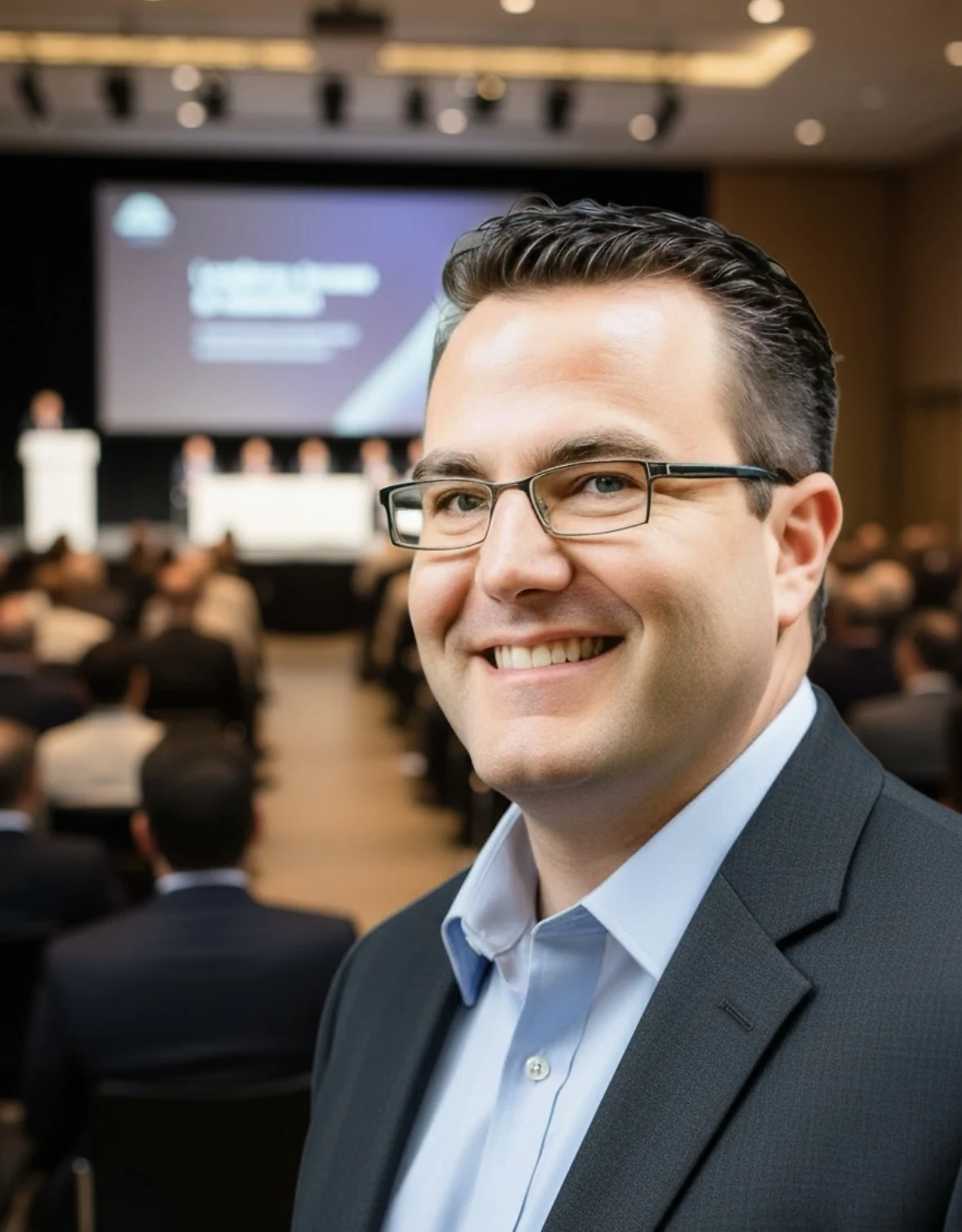
Jon Lakefish
Jon Lakefish is an AI keynote speaker and workshop facilitator. He has delivered 150+ engagements across North America and helps leaders and teams turn AI into practical, immediately useful work.
Get practical AI updates by email
Join Jon's monthly update for useful AI tools, real workshop lessons, and business ideas you can put to work right away.