What 230,000 People Actually Ask AI, and Four Other Things Business Leaders Should Know This Month
Summary: Anthropic filed to go public and disclosed $16.3 billion in first-half revenue from 11,900 business customers. Gartner data shows AI caused less than 1% of layoffs. A study of 3.67 million prompts shows people treat AI like a coworker. New models from Google, OpenAI, and Mistral got better and cheaper. And DoorDash's "several hundred" agent orders are a useful reality check. Here is what each one means for your team.
Every month I send The Fishing Report to the leaders, associations, and teams I work with. This is the November 2026 issue, with sources linked so you can check every number.
Anthropic just filed to go public. The numbers show where the AI money is going.
On October 26, Anthropic, the company behind Claude, filed to list on the Nasdaq under the ticker ANT. A filing like this forces a private company to show its books, and the books are the story.
Revenue for the first half of 2026 was $16.3 billion, up from $1.2 billion in the same period a year earlier. More than 11,900 customers spend at least $100,000 a year, and more than 1,900 spend over $1 million a year. The company has about 5,300 employees, which works out to more than $6 million in revenue per employee.
The money is not coming from consumers. Nearly half of revenue flows through the Amazon, Google, and Microsoft clouds, and the five largest customers make up about a quarter of sales. The filing shows a net loss of $80.7 billion for the half, but roughly $72 billion of that is an accounting adjustment tied to convertible notes, not cash leaving the company. Operating cash flow was positive $3.9 billion.
The eye-opener is the computing bill. Anthropic has agreed to spend up to $120.5 billion on compute through 2029, about $3.1 billion a month once all of that capacity is delivered in December. Reports put the expected valuation between $1.5 and $2 trillion, with the listing targeted for November.
What this means for you: The companies buying AI are not experimenting anymore. Eleven thousand of them are each spending six figures a year, and that number more than doubled in nine months. If you are still deciding whether this is real, your competitors have decided. And a public company has to report every quarter, so expect clearer pricing and fewer surprises from a tool a lot of you use every day.
The model race in plain English: Gemini 4, GPT-6.1 Terra, and a free trillion-parameter model
October brought a new flagship from Google, a cheaper workhorse from OpenAI, and the largest open model anyone has released.
Google: Gemini 4 Argon and Gemini 4 Carbon. Argon is Google's new frontier model for complex work: coding, financial analysis, and legal workflows. It is already in the Gemini app, Search, and Google Cloud. Carbon followed two weeks later, built for long engineering jobs and cybersecurity defense, and is in pre-release testing with the U.S. government before a wider launch. On its earnings call, Alphabet said the Gemini app has passed one billion users.
OpenAI: GPT-6.1 Terra. Rolled out October 26 as the faster, cheaper sibling of GPT-6.1 Sol. It is built for reading screenshots and technical drawings and for computer use, meaning it clicks through apps and websites to finish a multi-step job. API pricing is $1 per million input tokens and $5 per million output, about half the price of Sol. It is available in ChatGPT Work and Codex on paid plans.
Mistral: Mistral Large 4, open weights. On October 29 the French company released the weights of its trillion-parameter model for anyone to download and run on their own servers. It is aimed at companies and governments that want frontier-level AI they own, with a focus on cybersecurity. Mistral says it matches the best Chinese open model while using 47% fewer tokens per task.
What this means for you: Pick the model by the job, not the brand. For most writing and analysis, the mid-tier models from every company are now good enough and cost a fraction of the flagship. And if your IT team has ruled out cloud AI for sensitive work, an open model you can run in-house is now a real option, not a science project.
Also worth knowing: Google's Scam Detection now flags more than 5 million suspected scam calls and texts a month on Android, and SynthID Detector, which checks whether an image, video, or audio clip was made by AI, is now available worldwide in English.
Source: Google's October 2026 AI recap
What 230,000 people actually ask AI to do
PostHog, a software analytics company, has an AI assistant built into its product. On October 30 it published a study of a full year of prompts: 3.67 million messages from 230,000 people. It is the most honest look I have seen at how people really talk to AI when nobody is watching.
One in four prompts was a plain question. Another 8% started with a direct request like "show me" or "create." A total of 56,548 prompts were nothing more than "yes," "ok," or "go ahead," which tells you people are approving work, not writing essays. Only 15% of people said "please" at least once, and 2.7% ever said thanks.
Over four in ten prompts had no capital letters. Founders sent 20% of their prompts on weekends and almost 7% between midnight and 5 a.m. Nearly 800 people asked for help making something for a boss or an investor, 734 asked "is this good?", and 1,424 asked how to pay less. The busiest hour is 11 a.m. on a Tuesday.
The heavy users change. By their hundredth prompt, people said "please" twice as often as on their first, and swore four times as often. Both are signs of the same thing: they stopped treating it like a search box and started treating it like a colleague.
Why I am sharing this: Your team is already doing all of this, whether or not you have given them a tool. The people who get the most out of AI are the ones who ask for a specific result, in their own words, about their own work. That is the whole idea behind the Playbooks I write for each room: prompts about your customers, your quotes, and your open roles, so the first prompt someone types is a useful one.
One caveat: this is one company's assistant, so the topics skew toward dashboards and web traffic. The behavior is what matters, and it matches what I see in every workshop.
The AI job apocalypse, by the numbers: less than 1%
Two Gartner analysts, Brook Selassie and Helen Poitevin, wrote a piece for Fast Company on October 16 that I wish every executive would read before their next planning meeting. The headline finding comes from Gartner's own data across hundreds of large organizations and more than one million workers: AI productivity gains were responsible for less than 1% of tracked workforce reduction. Most layoffs came from shifting demand, the economy, mergers, and cost restructuring.
The authors sort leaders into three camps. The apocalypse crowd expects an imminent collapse in employment. The herd followers react to headlines and what competitors are doing, and sometimes restructure before they have any evidence. The realists, the group the authors side with, expect real disruption that ripples through industries over years, not a cliff. Their word for it is transformation: messy, uneven, and manageable.
Their advice to leaders reads like a checklist. Anchor decisions in data, not narrative. Redesign roles before you cut headcount. Set realistic timelines at the top, because what AI can do in a demo and what it does inside your company today are different things. Invest early in reskilling and keep the career ladder open for early-career people. Calibrate to your industry. And measure value beyond cost cutting: revenue, customer experience, and new offerings.
Where I land: The risk I see in the companies I visit is not the robot taking the job. It is the team that was handed the tools and never got excited about them, so the licenses sit unused while a competitor's team learns. "Invest early in reskilling" is the one line on that list most companies skip, and it is the cheapest one to fix.
The authors do flag one real cost: for roles built on routine cognitive tasks, the career ladder is getting narrower, especially at the entry level. That is a reason to train people, not a reason to wait.
Source: Fast Company: Everyone's panicking about the AI job apocalypse. Here's the reality
Reality check: AI shopping agents have sent DoorDash "several hundred" orders
Every AI company now has an agent that will shop for you. On DoorDash's October 30 earnings call, an analyst asked CEO Tony Xu how much business those agents are actually sending. His answer: "we're seeing maybe several hundred orders in total from some of these third-party agents." For scale, DoorDash completes an average of 3 million deliveries a day.
Xu's line on it was the right one: "you never want to fight gravity. But at the same time, you don't want to be delusional." DoorDash is building its own agents and says it is open to working with the outside ones. It is just not changing the business for them yet.
The takeaway for your business: Agents are real and worth understanding, but customer habits move slower than the demos. Learn the tools now. Do not rebuild your company around them yet.
Not another AI presentation: how my workshops work now
A few readers have asked what has changed in my sessions this year, so here it is in one place.
Imagine attending an AI workshop where every example and exercise is built around the actual people, companies, and associations in the room, with an AI Playbook written for each attendee about what AI can do for them now. That is the session. It is high-energy and hands-on, and it mixes humor, short videos, surprising live demonstrations, and real problem-solving so that AI feels approachable, exciting, and immediately useful.
Before the event. For a preregistered workshop, I research each organization and role using public information and the priorities you agree on. Every attendee receives a customized Playbook with realistic challenges, reusable prompts, and practical exercises written for their work, whether that is association management, sales, operations, or running a family business.
During the session. Participants put the Playbook to work live in an AI Hot Seat. For an association that means membership engagement, marketing, communications, events, strategic planning, and operational efficiency. For a company it means quoting, hiring, customer follow-up, and the reports nobody has time to write. Guided exercises show how to improve an AI result, protect sensitive information, and apply human judgment.
After the session. The session closes with a look at emerging AI capabilities and a practical implementation plan. Attendees leave with their Playbook, their prompts, and their example outputs, and they can keep using all of it the next morning. No coding or technical expertise required.
It is the difference between watching a demo and leaving with something that works Monday morning. Every session is scored by the audience through SpeakFeed, and the results are public on my Audience Scorecard.
Where I was in October, and where I am headed
October took me to Dallas for the Mechanical Power Transmission Association's fall meeting, where every one of the 10 scored responses was a perfect 10, and to Kohler, Wisconsin, for a manufacturer's leadership event. Lakefish Group also ran the media preview and opening events for Utah's first combined Outback Steakhouse and Bonefish Grill in Murray.
Next up: Chicago on November 5 with the Entrepreneur and Family Business Council at DePaul University, then four CEO peer-group sessions in Vancouver, one in Calgary, and a private event in New York City.
Booking 2027? My rates go up on January 1. Secure a 2027 date before the end of this year and I will honor current pricing, whichever month you choose. I am already scheduled in 27 cities across the US and Canada in 2027, so if your event lands in or near one of them, we cut the travel costs down or skip them entirely. Book a 30-minute call or email Jon@LakefishGroup.com. See event planner details.
Frequently asked questions
Did AI cause the recent wave of layoffs?
According to Gartner's analysis of hundreds of large organizations and more than one million workers, published in Fast Company in October 2026, AI productivity gains accounted for less than 1% of tracked workforce reduction. Most layoffs were driven by shifting demand, economic conditions, mergers, and cost restructuring.
How much revenue did Anthropic report in its IPO filing?
Anthropic's S-1, filed October 26, 2026, reported $16.3 billion in revenue for the first half of 2026, up from $1.2 billion in the first half of 2025, with more than 11,900 customers spending at least $100,000 a year.
What do people actually ask AI assistants to do?
In PostHog's study of 3.67 million prompts from 230,000 people, one in four prompts was a plain question, about 8% were direct requests such as "show me" or "create," and more than 56,000 were one-word approvals like "yes" or "ok." Only 15% of users ever said "please."
Which AI model should a business use in late 2026?
Pick by the job. Mid-tier models such as GPT-6.1 Terra and Gemini 4 Argon handle most writing and analysis at a fraction of flagship pricing. Companies that cannot send sensitive data to the cloud can now run an open-weight model such as Mistral Large 4 on their own servers.
What is an AI Hot Seat?
An AI Hot Seat is a live, hands-on session where attendees bring real problems from their own work and solve them on stage with AI tools, using a Playbook of prompts written for their organization ahead of time. Lakefish Group runs them as two-hour sessions and as part of longer workshops.
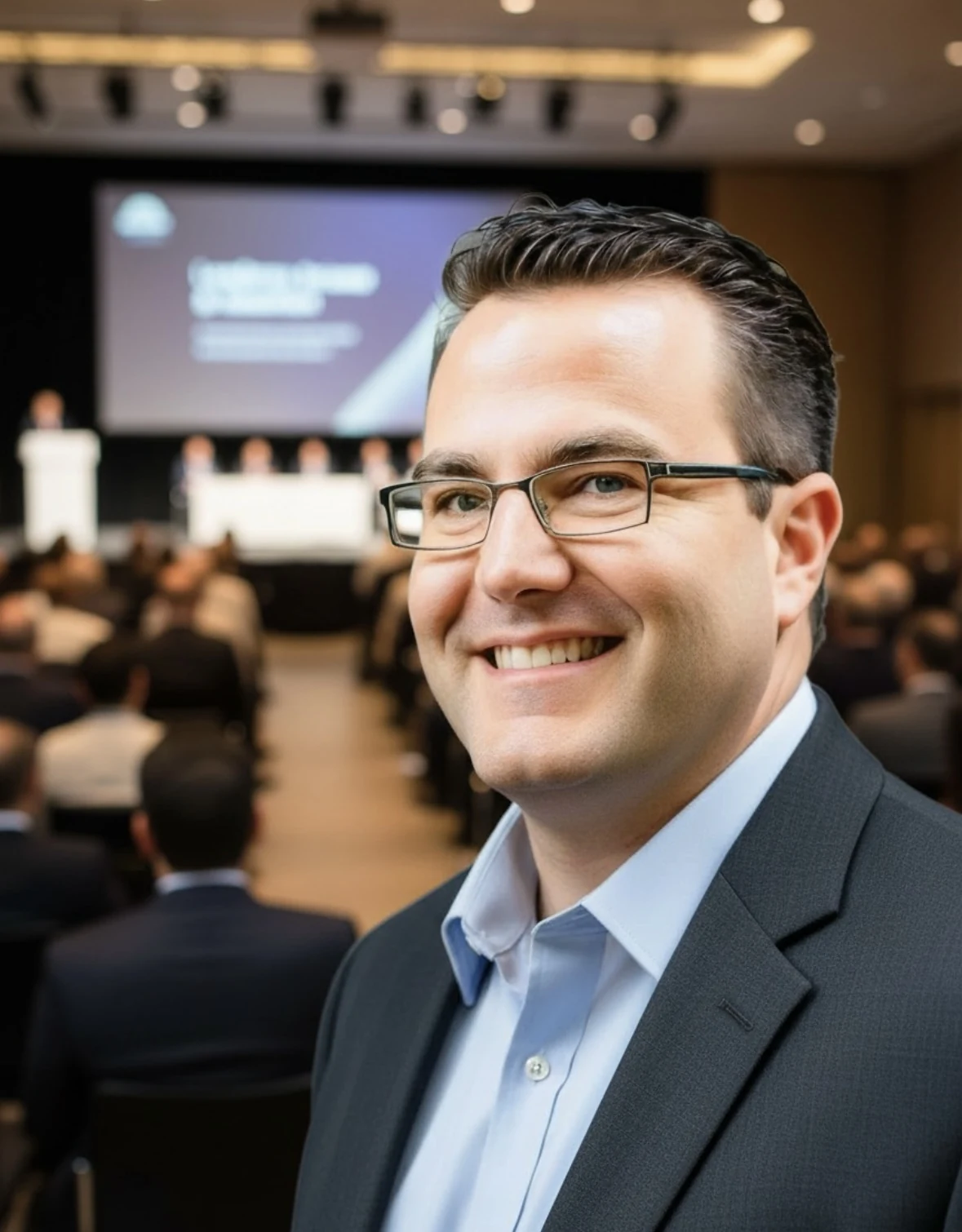
Jon Lakefish
Jon Lakefish, MBA, is the founder of Lakefish Group and co-founder of SpeakFeed. He delivers AI keynotes, Hot Seats, and hands-on workshops across the US and Canada for manufacturers, associations, and leadership teams. Audience scores for every session are public at lakefishgroup.com/audience-results.
Get practical AI updates by email
Join Jon's monthly update for useful AI tools, real workshop lessons, and business ideas you can put to work right away.